Denhag: A Modern Display Font for Creative Businesses
There’s a particular kind of quiet chaos that happens right before a small product launch. Last month I found myself surrounded by test prints of candle jar labels, all lined up across my dining table. The scents were perfect, the wax was smooth, but the labels felt forgettable. The font I’d been using was safe, a bit too quiet, and definitely not doing justice to the personality we’d built into the brand. That’s when I started searching for a display font that could immediately change the energy of our packaging—something cool, modern, and a little unexpected. Denhag ended up being the answer.
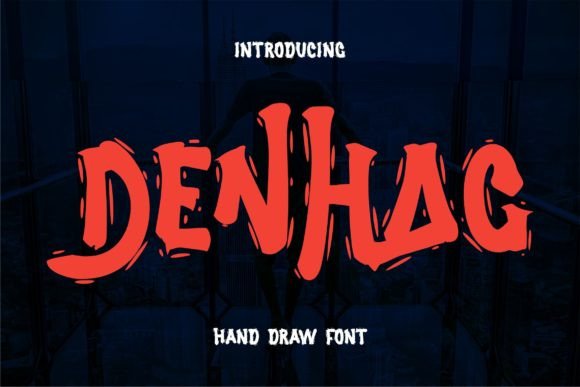
Denhag is a cool and modern display font with a fun and unique style that sits comfortably between playful and refined. It has a hand-drawn energy that doesn’t sacrifice legibility, making it one of those rare typography choices that actually makes a small business look more polished the moment you apply it. And because it’s PUA encoded, you get fast access to a whole drawer of alternates and swashes—exactly the kind of detail that takes a design from “just okay” to intentional and memorable.
Denhag for Logo Design and Brand Marks
When I tested Denhag as a display font for our main logo, the difference was immediate. The wordmark suddenly had character—no extra graphics needed. In my work with boutique owners and independent makers, I’ve seen again and again that a logo built with a strong display font can carry a brand identity on its own. Denhag works especially well for businesses that sell handmade goods, personal care items, or anything where a human touch is part of the story. The slight bounce in the letterforms feels approachable, while the clean, modern edges keep it professional enough for a website header or shop sign.
Because Denhag is designed as a premium font for display purposes, it shines brightest in larger sizes. I wouldn’t set a product description in it, but for that one- or two-word brand mark on a hangtag or embossed on a leather patch, it’s exactly the kind of typeface that makes a business look like it’s been around for years.
Denhag Display Font on Product Packaging and Labels
Using Denhag on product packaging and labels doesn’t just add personality—it creates a cohesive visual signature. For my candle label test, I replaced the old generic serif with Denhag for the scent names and instantly the jars looked like a premium line worth a higher price point. Small businesses, whether a bakery updating pastry boxes or a skincare brand rethinking their bottles, need a display typeface that feels both current and timeless. Denhag hits that balance.
Applying Denhag to Candle Jar Labels and Bakery Boxes
Imagine a line of hand-poured candles labeled with Denhag’s bold, slightly playful letterforms—the contrast against a minimalist background makes the product stand out online and on store shelves. I’ve also seen a similar effect with bakery packaging: a simple kraft box with a sticker that uses Denhag for the product name becomes something you’d want to photograph. The key is using this display font as the hero element, then supporting it with a quieter sans serif font for the fine print. Because Denhag is PUA encoded, I was able to swap in a stylistic alternate for the first letter of each scent, which gave the set a custom, almost hand-lettered feel without hiring a calligrapher.
Readability on small labels can be a concern with display fonts, but I found that Denhag holds up well even on a 2-inch round sticker as long as you keep the wording short—product name, one tagline, nothing more. For ingredient lists or care instructions, I always recommend pairing it with something like a clean, neutral modern typography face.
Using Denhag’s PUA Encoded Glyphs for Decorative Accents
One feature that makes this premium display font so versatile is its PUA encoding, which unlocks all the alternative glyphs and swashes directly in compatible design software. I didn’t need any special plugins to turn a standard word into something that looked custom-drawn. This is a huge advantage for a small business owner who isn’t a full-time designer but still wants to create distinctive thank-you cards, stickers, or unboxing inserts.
For example, when I designed a set of postcard-sized thank-you notes to tuck inside online orders, I used Denhag for the headline “You’re Wonderful” and switched one of the letters to an alternate character with a long, graceful tail. It took seconds. The result felt warm and intentional, and that small touch alone made the packaging feel like a higher-end experience. Because all the glyphs are accessible in standard applications, you can experiment with ligatures and swashes without breaking workflow.
Pairing Denhag with Sans Serif Fonts for Readability
While Denhag works beautifully as a headline display font, pairing it with a clean sans serif typeface can make your entire brand identity feel more polished and easy to read. In my own materials, I combined Denhag with a simple, slightly condensed sans serif for body text and social media captions. The contrast is striking: the expressive, almost handcrafted personality of Denhag for the focal point, and the quiet, orderly sans serif for everything that needs to be scanned quickly.
This kind of font pairing is incredibly practical for businesses that create both printed and digital materials. A café menu, for instance, could use Denhag for each section header—espresso, pastries, signature drinks—and a reliable sans serif for the descriptions and prices. The menu immediately feels designed rather than assembled. Similarly, an online shop banner that uses Denhag for the main seasonal offer with a sans serif subtitle will look cohesive across desktop and mobile screens. This simple combination is one of the fastest ways to make a small brand look more professional and consistent.
Denhag Typography on Social Media Graphics and Website Banners
Beyond physical packaging, applying Denhag to digital design assets like social media graphics and website banners helps a small business look instantly more professional. I tested it on an Instagram post template announcing a new scent drop, and the engagement felt higher—not because of magic, but because the typography stopped the scroll. A modern display font with personality makes your message feel less like an ad and more like a curated piece of content.
For website use, Denhag excels in hero sections and promotional ribbons. A short, bold headline set in this font draws the eye immediately, and pairing it with a minimalist layout keeps the overall design elegant. I’ve seen boutique owners use it for seasonal sale announcements, coaching brands place it on video thumbnails, and online sellers integrate it into their Etsy shop banners. Because the font contains such a fun and unique style, it adapts surprisingly well to different creative directions—soft and romantic for a beauty brand, bold and zesty for a specialty food label, or edgy for a modern apparel tag.
Something I always remind fellow small business owners: before you commit to any font for commercial work, check the license terms carefully. A commercial font license ensures you can use Denhag on product packaging, merchandise, client projects, or digital templates without worry. Also, consider which file formats are included—most modern display fonts come in OTF or TTF, both of which work seamlessly in Canva, Adobe apps, and free alternatives. A quick glance at the product details will confirm multilingual support and whether the weights you need are available.
Typography is one of the quiet workhorses of brand identity. It shapes first impressions, builds recognition, and tells your customer what to expect before they ever read a single word. A display font like Denhag chooses to lead with warmth, creativity, and a dash of boldness. For the candle jars now lined up in my home office, it was exactly the refresh the brand needed. No rebrand, no expensive agency work—just a thoughtful typography switch that made everything feel more cohesive, more memorable, and a lot more like the business I set out to build.